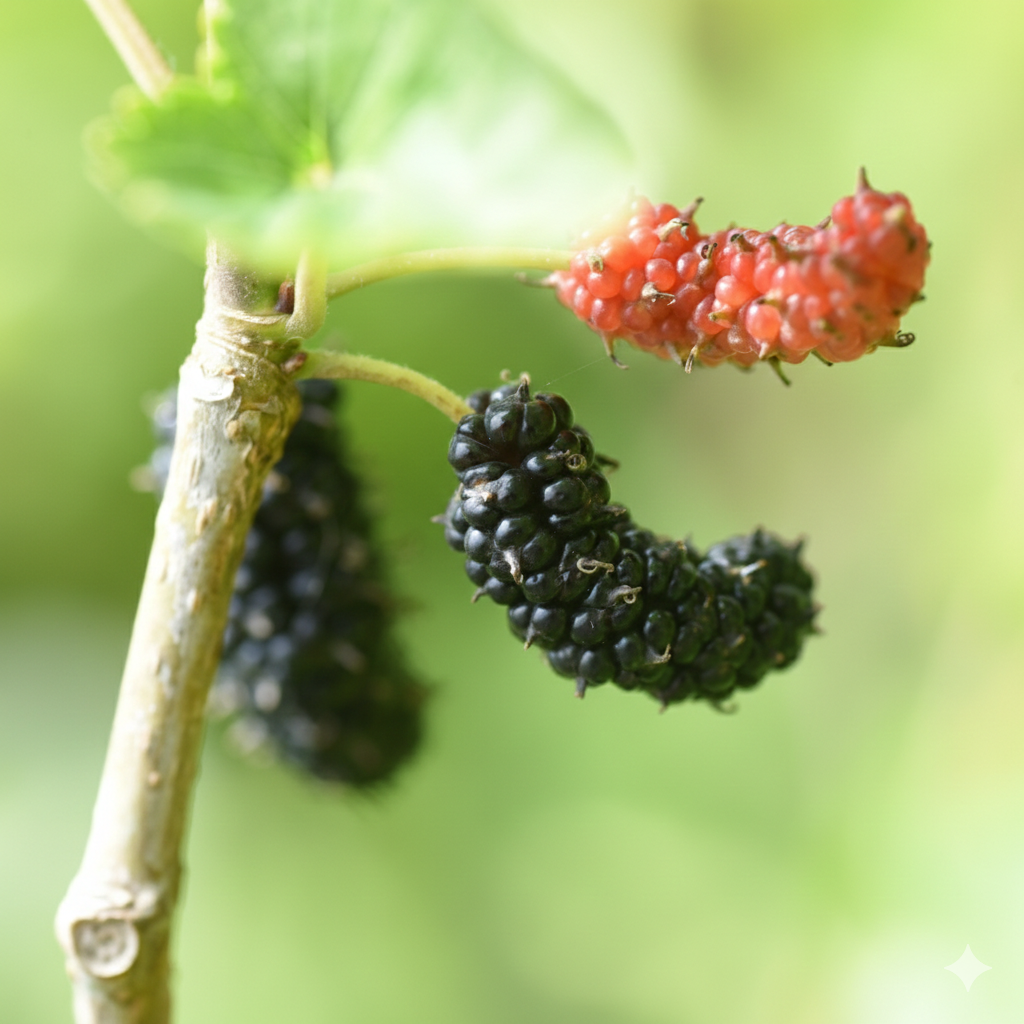
Dwarf Everbearing Mulberry
Dwarf Everbearing Mulberry
Couldn't load pickup availability
Dwarf Everbearing Mulberry (Morus spp.) is a compact, highly productive fruit tree that delivers sweet, rich berries over an extended harvest season—all without taking over your yard. This dwarf variety is especially popular with backyard growers and homesteaders who want big harvests without needing a big ladder just to get to the fruit. The berries ripen from red to deep purple-black and have a deep, almost wine-like flavor.
Plants start shipping in spring after danger of freezing and will come in robust 2" plugs.
Why Grow Dwarf Everbearing Mulberry?
Small Tree, Big Harvests
Naturally compact growth makes it ideal for small yards, food forests, and even large containers. This dwarf mulberry rarely exceeds 15 ft, and can even be kept in a large pot.
Long, Steady Fruit Production
Produces fruit over several weeks instead of all at once—easy to keep up with and enjoy fresh.
Great for Home Growers
Easy to manage, low-maintenance, and well-suited for beginner fruit growers.
Growing Information
🌱 Plant Type: Perennial fruit tree
🌱 Hardiness Zones: 5–9
🌱 When to Plant: Early spring or fall while dormant
🌱 When to Harvest: Late spring through early summer (extended harvest)
Cultivation Tips
- Soil requirements: Prefers well-drained soil, but adapts well to most garden soils, including loam and light clay.
- Sunlight: Full sun is best (6–8+ hours per day) for best fruiting, though it tolerates partial shade.
- Watering: Water consistently during the first growing season to establish roots. Once established, it is moderately drought tolerant, but regular watering improves fruit quality.
- Harvesting: Harvest berries when they turn fully dark and soft (resembling large blackberries). For easy picking, place a sheet beneath the tree and gently shake branches.
Dwarf Everbearing Mulberry is self-fertile, so one tree will produce fruit on its own. It stays much smaller than standard mulberries and can be kept at a comfortable picking height. Like all mulberries, birds love the fruit—so it might be a good idea to pick up some netting once the fruit starts coming in.