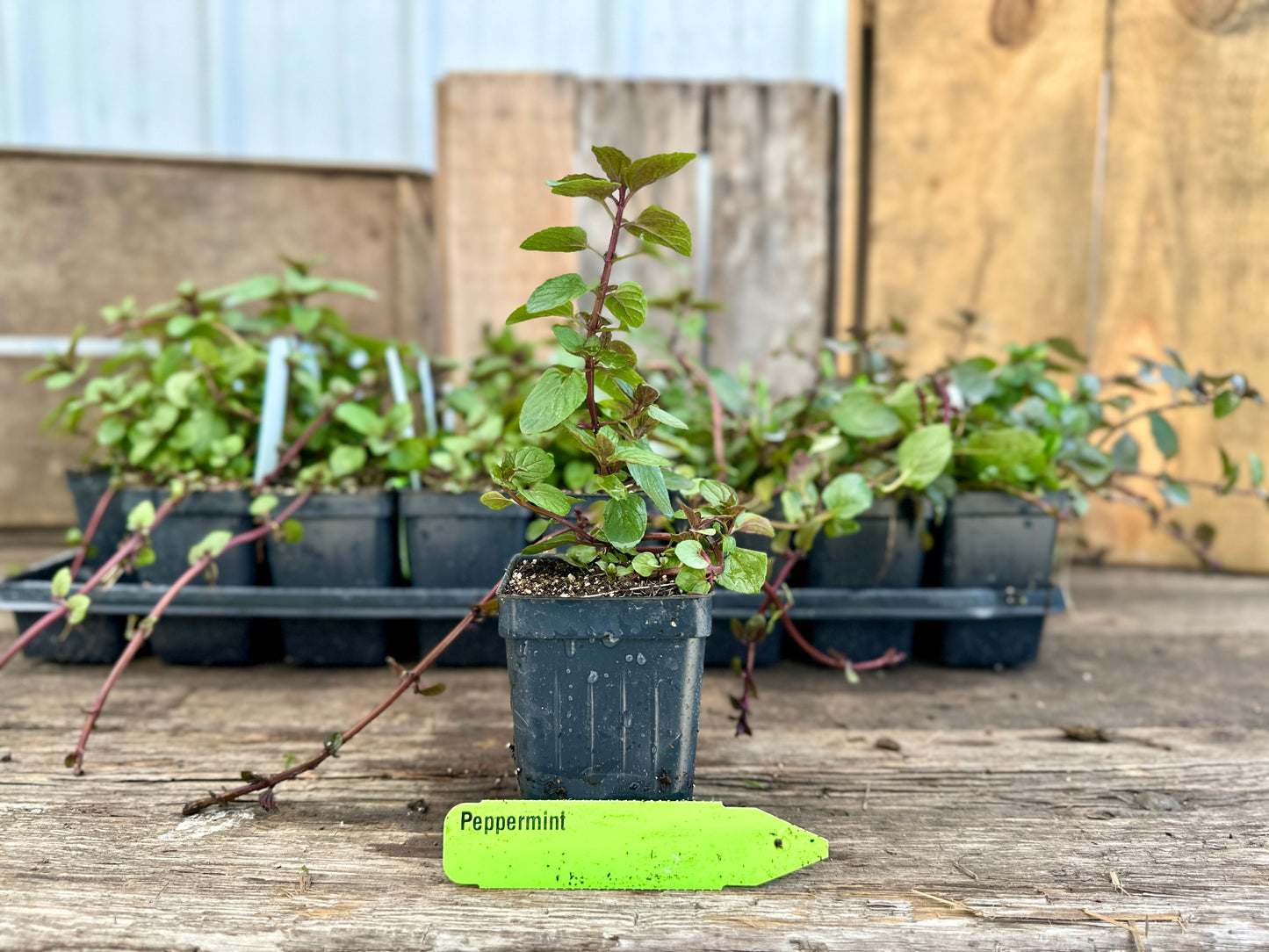
Peppermint Plant (Mentha × piperita)
Peppermint Plant (Mentha × piperita)
Couldn't load pickup availability
Peppermint (Mentha × piperita) is probably the most well-known herb in the mint family. That bold, cool, refreshing flavor is instantly recognizable and incredibly versatile. From teas and cocktails to baked goods and homemade remedies, peppermint earns its spot in just about every herb garden. It's also one of the easiest herbs you can grow, making it a great starting point for new gardeners.
SHIPPING INFO: Herbs primarily ship in May.
Why Grow Peppermint?
🍵 Classic Culinary Herb: Fresh peppermint is a staple for teas, desserts, cocktails, and savory dishes alike.
🌿 Easy and Vigorous: One of the most beginner-friendly herbs out there—plant it once and it will keep coming back.
💊 Long Herbal Tradition: Peppermint has been used medicinally for centuries and remains one of the most popular herbs in natural wellness.
Growing Information
🌱 Plant Type: Perennial herb
🌱 Plant Height: 12–24 inches
🌱 Hardiness Zones: 3–11
🌱 When to Plant: Spring, after last frost
🌱 When to Harvest: Once established, harvest as needed throughout the growing season; best before flowering for peak flavor
Cultivation Tips
- Soil: Moist, well-draining soil with moderate fertility. Peppermint isn't too fussy about soil as long as it stays consistently moist.
- Sunlight: Full sun to partial shade. In hotter climates, some afternoon shade helps keep the plant from stressing out.
- Watering: Keep soil consistently moist—peppermint doesn't like to dry out. Mulching around the base helps retain moisture during summer.
- Harvesting: Snip stems just above a leaf node to encourage bushy growth. For the most potent flavor, harvest in the morning after the dew has dried. Regular harvesting keeps the plant productive all season long.
- Containment: Peppermint spreads enthusiastically by underground runners. Growing it in containers or using a root barrier in garden beds will keep it from crowding out its neighbors — a lesson many gardeners learn the hard way.
Medicinal & Herbal Uses
Peppermint has been valued as a medicinal herb for thousands of years, with records of its use dating back to ancient Egypt, Greece, and Rome. Today it remains one of the most widely used herbs in natural wellness.
Some of the most common traditional uses include:
- Digestive support: Peppermint tea is one of the most popular traditional remedies for bloating, indigestion, and an upset stomach. Peppermint oil is also commonly used in this way.
- Headache relief: Some people apply diluted peppermint oil to the temples for tension headaches—the cooling menthol sensation is thought to help ease discomfort.
- Cold & congestion: The menthol in peppermint has long been used to help open airways and ease congestion, which is why you'll find it in so many cough drops and chest rubs.
- Aromatherapy: The scent of peppermint is traditionally associated with mental clarity and energy.
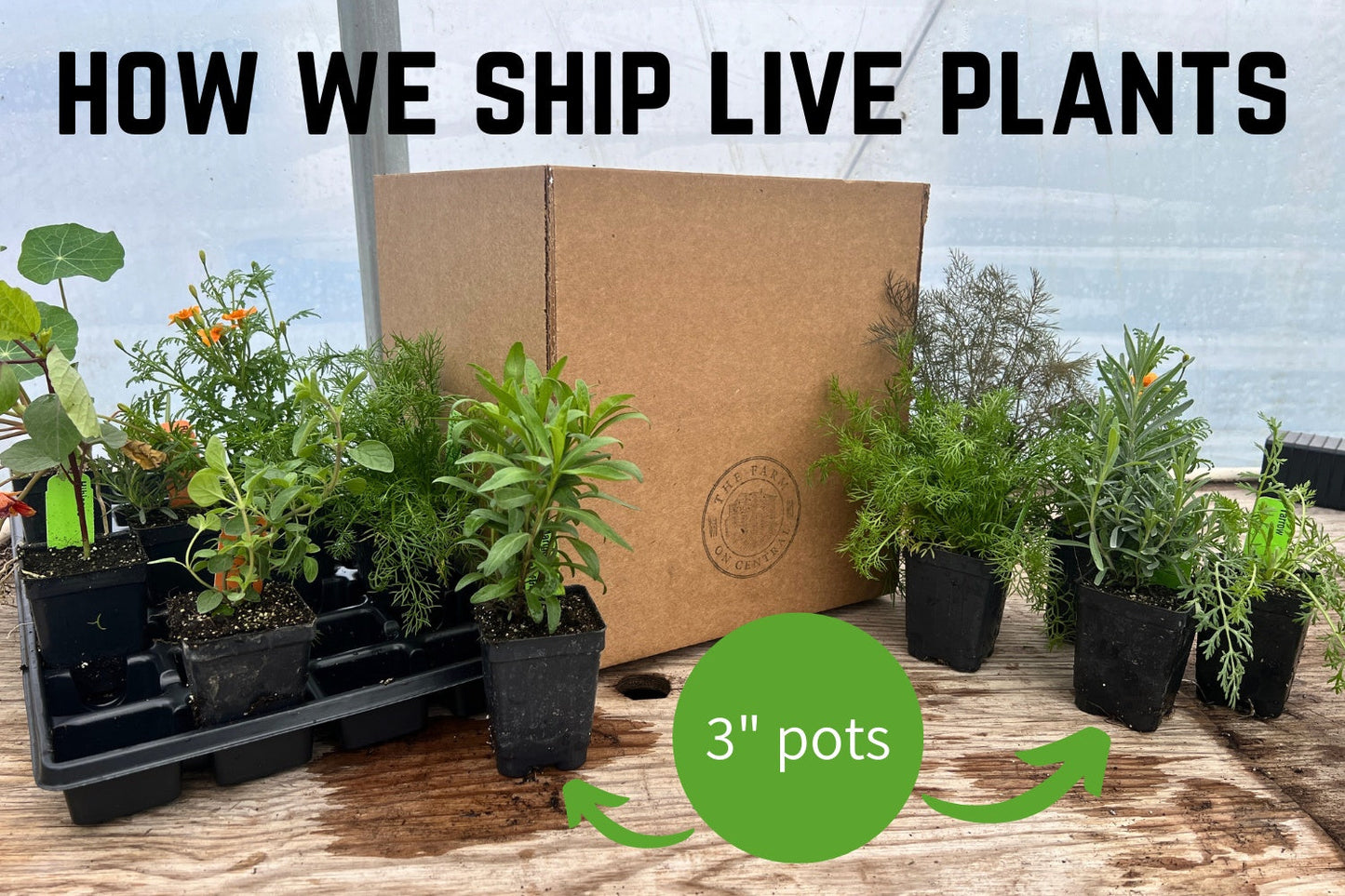
Our peppermint is greenhouse-grown and arrives as an established plug in a 3" pot, ready to go straight into your garden or container.
Non-GMO Commitment: At The Farm on Central, all our plants are guaranteed non-GMO and not genetically modified in any way, upholding natural breeding methods and promoting sustainable gardening and farming practices.