Cilantro Plants
Cilantro Plants
Couldn't load pickup availability
Cilantro (Coriandrum sativum) is one of the most widely used herbs in the world, showing up in everything from Mexican salsas and guacamole to Indian curries, Thai soups, and Middle Eastern dishes. What makes it especially interesting is that it's essentially two herbs in one. The fresh leaves are used as cilantro, while the dried seeds are the spice known as coriander, with a warm, citrusy, almost floral flavor quite different from the leaves. If you cook with either, it's worth growing your own.
SHIPPING INFO: Herbs primarily ship in May.
Why Grow Cilantro?
🌮 A Global Kitchen Staple: Few herbs are as widely used across as many cuisines. If you cook Mexican, Indian, Thai, or Middle Eastern food, fresh cilantro is hard to replace.
🌱 Two Herbs in One: Harvest the leaves as cilantro and let some plants go to seed for coriander—a spice with its own distinct flavor and culinary identity.
⚡ Fast-Growing: Cilantro grows quickly and can be harvested within weeks of planting, making it one of the most rewarding herbs to grow for impatient gardeners.
Growing Information
🌱 Plant Type: Annual herb
🌱 Plant Height: 12–24 inches
🌱 Hardiness Zones: 2–11 (grown as a cool-season annual)
🌱 When to Plant: Spring or fall (cilantro prefers cool weather and will bolt quickly in summer heat)
🌱 When to Harvest: Begin harvesting leaves once the plant has several sets of true leaves; harvest seeds in late summer once they turn tan and dry on the plant
Cultivation Tips
- Soil: Well-draining soil with moderate fertility. Cilantro isn't particularly fussy about soil as long as drainage is good.
- Sunlight: Full sun in cooler weather; partial shade can help extend the harvest season in warmer months.
- Watering: Keep soil consistently moist but not waterlogged. Consistent moisture helps slow bolting.
- Harvesting: Harvest outer leaves and stems regularly, which encourages the plant to keep producing. Once the weather warms up, cilantro will bolt—sending up a tall flower stalk and shifting its energy to seed production. At that point, let it go to seed for coriander or pull it and replant.
- Bolting: Cilantro bolts quickly in heat, which is the number one frustration for home growers. Planting in a spot with afternoon shade, keeping soil moist, and succession planting every few weeks are the best ways to keep a steady supply of fresh leaves going through the season.
- Coriander seeds: Once the plant flowers and seeds turn from green to tan, cut the seed heads and dry them in a paper bag. Use whole or ground as a spice. The flavor is warm, citrusy, and quite different from the fresh leaves.
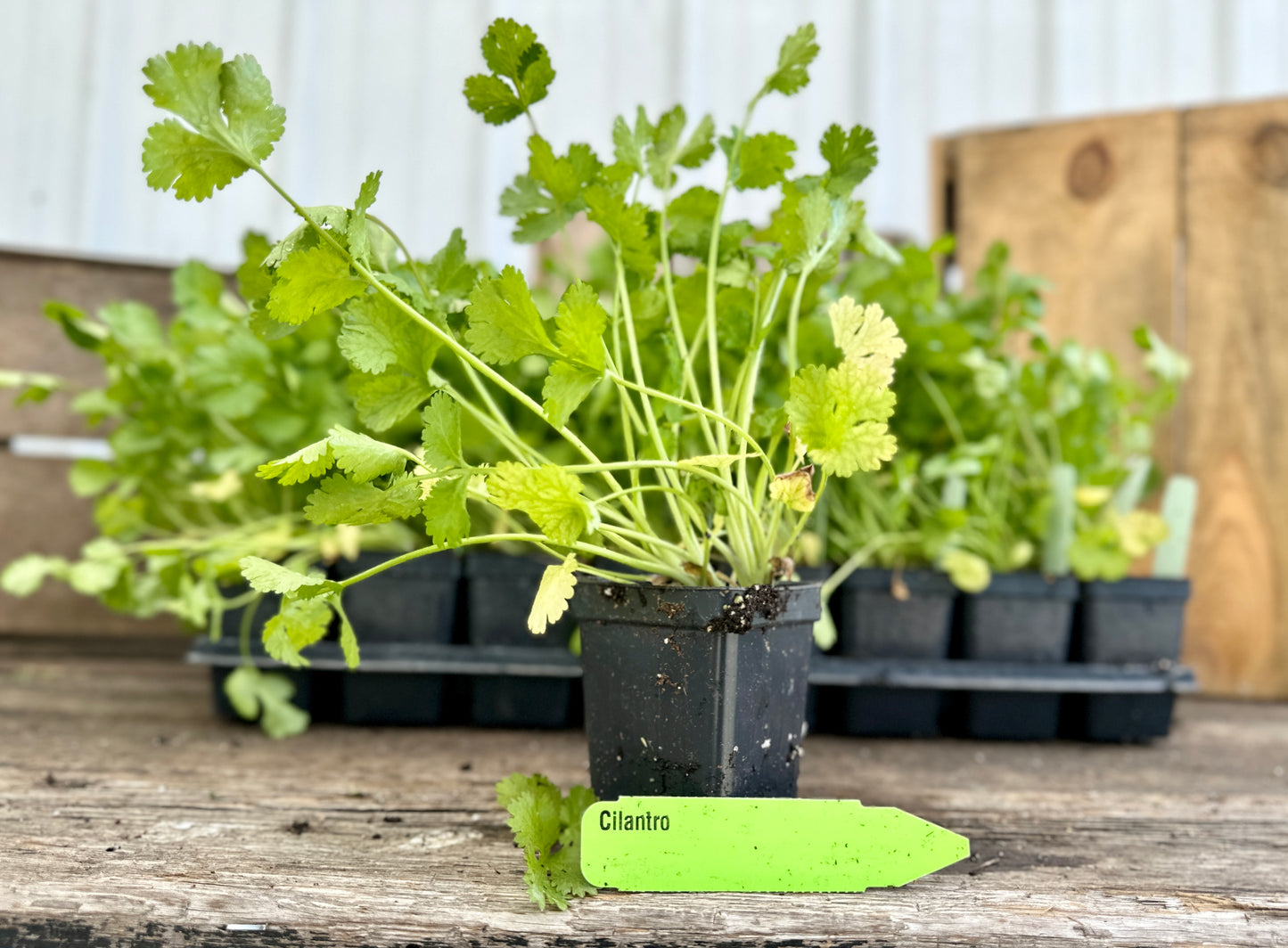
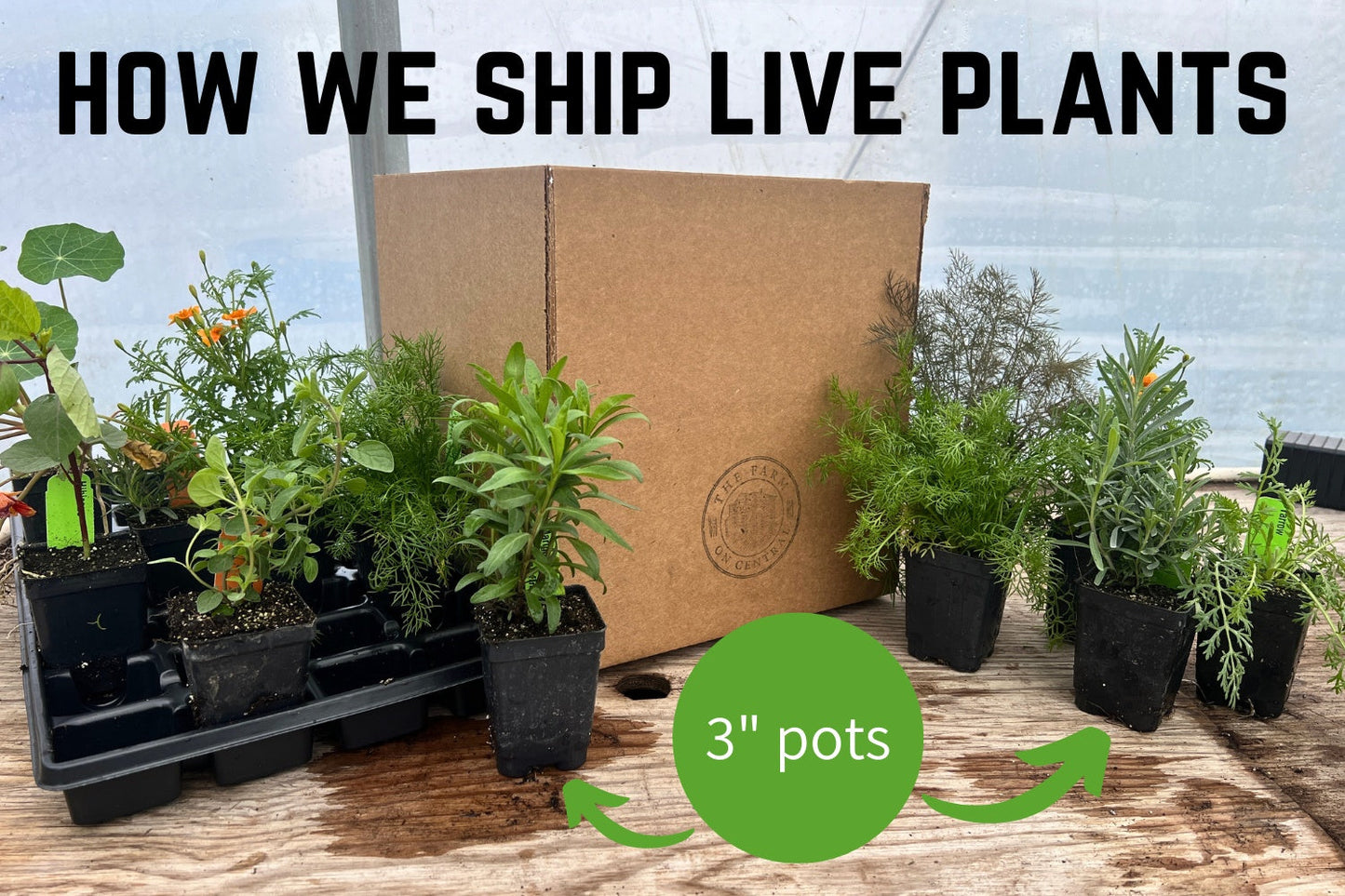
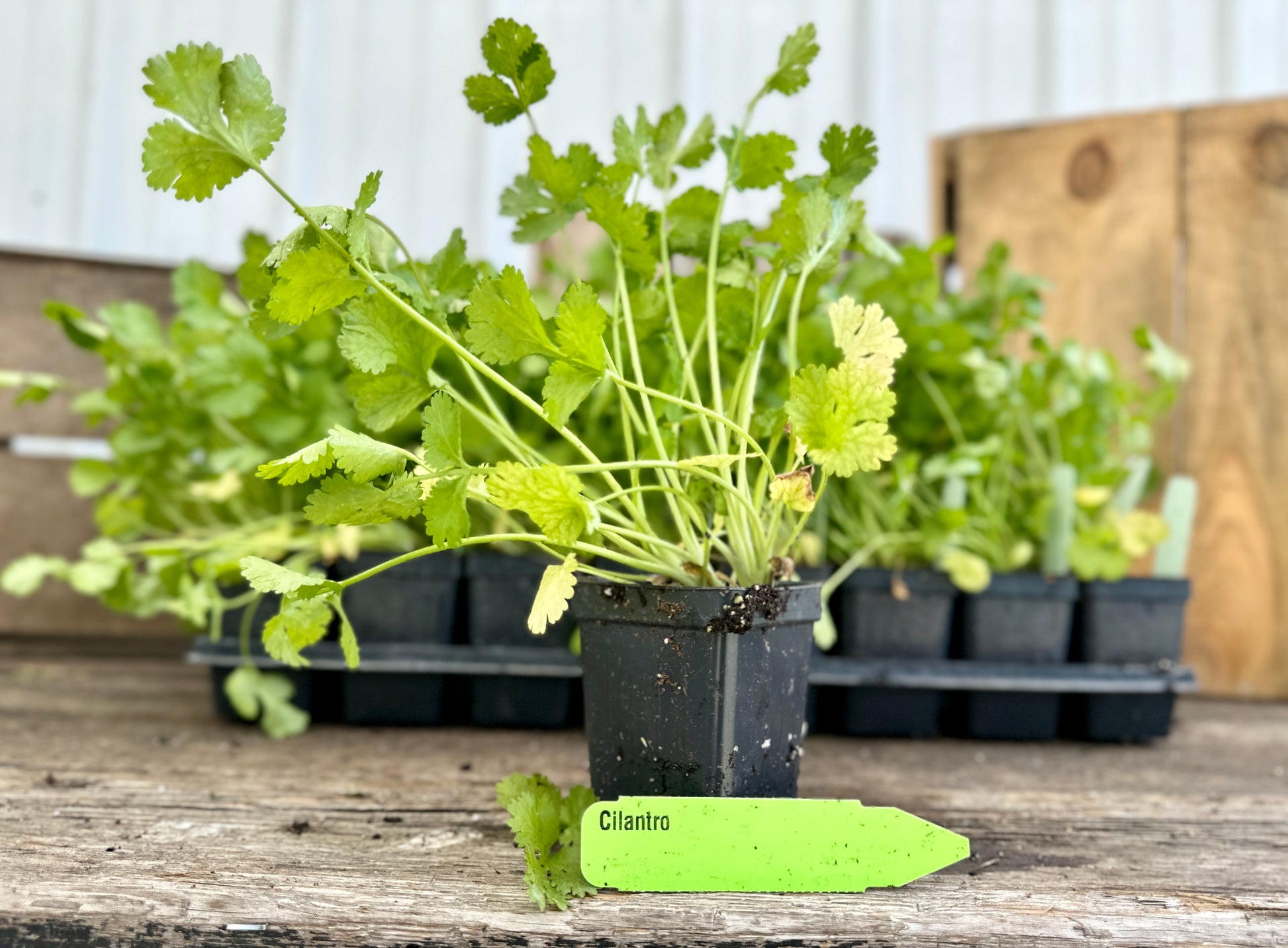
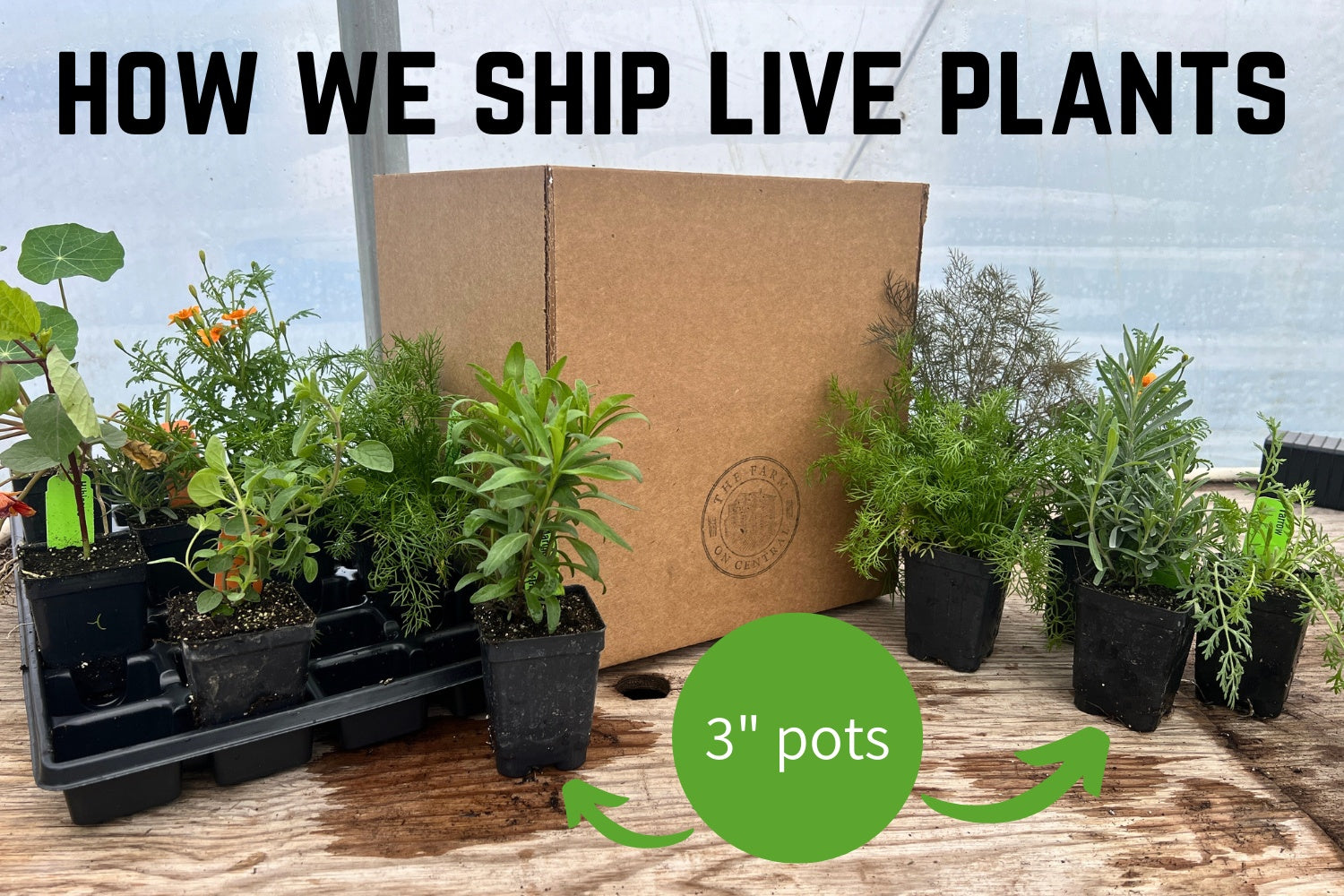
Our cilantro is greenhouse-grown and arrives as an established plug in a 3" pot, ready to go straight into your garden or container.
Non-GMO Commitment: At The Farm on Central, all our plants are guaranteed non-GMO and not genetically modified in any way, upholding natural breeding methods and promoting sustainable gardening and farming practices.